
A scalp business where every visit leaves a record.
Dr Scalp pairs AI-led scalp analysis with bio-cell technology and a written protocol. Precise, unbiased and documented - which is what today's customer trusts, and what an operator can actually manage.
A category that is growing, in a country
under more pressure than its neighbours.
Demand for scalp care is rising, and customers are no longer satisfied with a treatment they cannot verify. Dr Scalp answers that with a systematic, science-led approach - consistent care, measured outcomes, the same at every visit.
Hair loss by age group
No longer a concern of older adults alone. The highest incidence falls among people in their thirties.
Taken together, 43.9% of all reported cases fall among people in their twenties and thirties.
Market size, 2020–2024
The hair and scalp treatment market has grown every year for five years, as more people seek technology-led care.
SGD millions. An estimated 1 in 4 Singaporean adults - over 1.7 million people - experience some form of thinning or scalp condition.
Singaporeans carry roughly twice the daily stress
of the region around them.
Stress is among the most commonly cited contributors to hair and scalp conditions, and on this measure Singapore is an outlier within South-East Asia.
Employees reporting daily stress. Separately, Singapore's Ministry of Manpower found that roughly one in three workers experienced work-related stress or burnout in 2024.
Gallup, Singapore Workplace Report 2026 (2025 data) · MOM iWorkHealth 2024, via NTUC
Forecast annual growth for the hair-loss and thinning segment, 2026–2033 - ahead of the 7.0% forecast for hair and scalp care as a whole.
Asia Pacific's share of the global hair loss treatment products market in 2025 - the largest of any region.
Forecast annual growth for global hair loss treatment, 2026–2031, with Asia Pacific the fastest-growing region.
Source: Grand View Research · Straits Research · Mordor Intelligence

AI Scalp Analysis
The foundation of the diagnostic process. Advanced imaging and algorithmic mapping identify thinning, oil imbalance, inflammation and sensitivity across four fixed zones and five measures. Every client receives an objective, data-led assessment free of individual bias - and because the scoring is consistent, progress can be tracked rather than described.

ZynStem™ Bio-Cells
Developed through bio-science research, ZynStem™ is the treatment behind Dr Scalp's restoration results. A proprietary formulation of bio-active ingredients that nourishes the scalp and supports dormant follicles, built for efficacy and safety - for clients experiencing thinning, weakened roots or post-treatment shedding.

NanoJET™ Technology
NanoJET™ disperses ZynStem™ and other serums into the deeper layers of the scalp without needles. Higher absorption, even distribution, no discomfort - a high-performance treatment delivered as a calm, spa-like experience. Easy to operate and hygienic by design, which matters when you are training staff rather than hiring specialists.
A step-by-step is a sequence.
A protocol is a specification with a record.
Walk into any scalp or beauty salon in Singapore and there’s a sequence on the wall. Cleanse, massage, apply, rinse, recommend. Staff follow it, more or less, depending on how busy it is and who’s on shift. Nobody can tell afterwards.
-
01
The scan is scored by software, not by a person
Four fixed zones. Five measures — oil, flaking, sensitivity, pigment, density. The same scoring on a Tuesday morning as on a Saturday afternoon, and the same at your studio as at ours. A therapist can have an off day. The scoring can’t.
-
02
Every visit leaves a record
Timestamped, scored, stored. Including trials. Including customers who buy nothing.
-
03
The report goes out within 24 hours, or it doesn’t
No partial credit and no interpretation. A binary you can measure.
-
04
Week eight is a comparison, not an opinion
Same zones, same measures, same software. The customer sees whether it worked. So do you.
Four problems this category has.
The protocol answers all four.
You hire trainable people, not rainmakers
Salons are hostage to whoever consults best, and when that person leaves the clients follow. When the scan does the diagnosis and the report does the recommending, you are hiring people you can train rather than people you must retain.
The gap between studios is a number
Two branches of the same salon deliver two different experiences, and the owner learns about it from a review. Ours produces the same measurement everywhere, so the difference between one studio and another is something you can look at on a Monday.
Complaints settle with a file, not a refund
When a customer says nothing was done, or that they were promised regrowth, most operators have a therapist’s memory against a customer’s. You have the images, the scores, the written recommendation and the timestamp.
Treatment and retail feed each other
Most treatment businesses treat retail as an afterthought at the till. Here the scan report names a specific range, and a 300ml shampoo used daily runs out at about eight weeks — the same length as a treatment cycle.
Independent coverage. We did not commission these.
Improvements that are seen, measured and tracked.
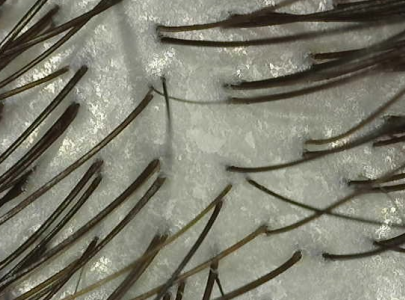
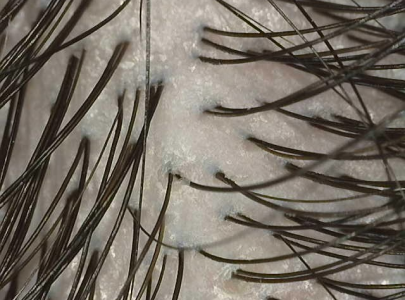
The same zones are photographed at the same magnification every visit, so the comparison is like for like.
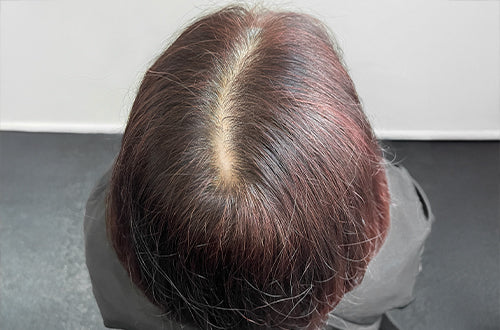
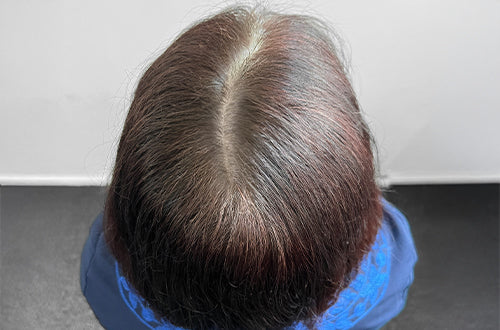
Aileen Kim, 58
Colour Protect routine at home, with studio treatment.
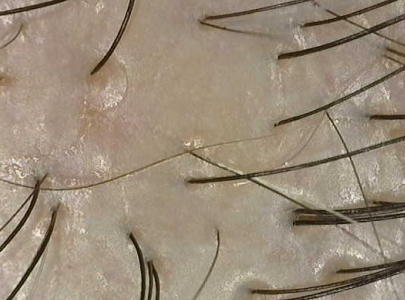
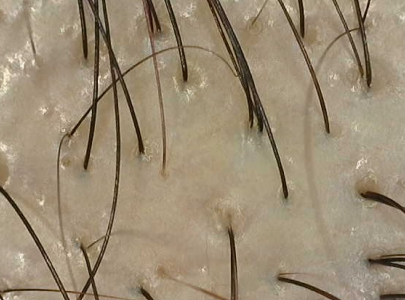
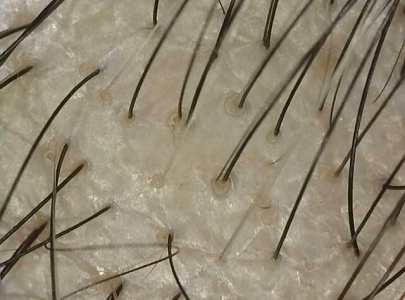
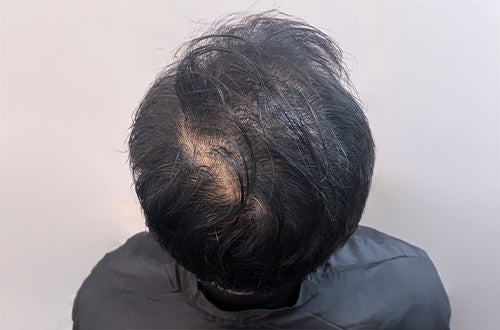
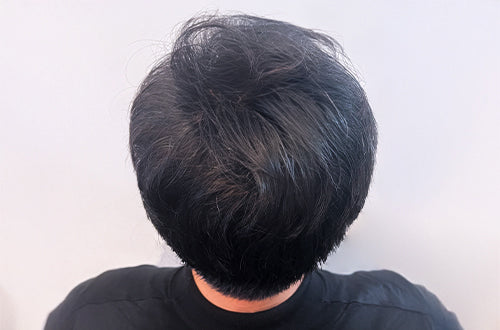
Jason Tan, 32
Growth series plus studio treatment.
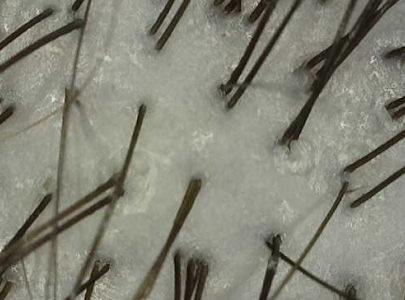
End to end, from first consultation to opening day.
Ten stages across three phases. For each one: who does it, what you receive, and what “done” looks like. Roughly 6 to 12 months from signature to opening.
Nothing is built and nothing is spent until both sides are sure. This is the part most franchisors rush.
Franchise consultation
The first call, and the questions you should be asking us. Forty-five minutes. We will tell you what we do not know yet.
Preliminary agreement
Terms, territory and the review period - a minimum of ten working days between receiving the agreement and signing it.
Market research
Catchment, competition and footfall for your proposed site, assessed together before a lease is signed.
Fit-out, equipment and training run in parallel, so the room and the people are ready on the same day.
Interior design and construction
Fit-out drawings and a specified supplier list, so the room works for the protocol rather than against it.
HQ training and recruitment
Two weeks at Raffles City, on live customers, for you and your first two therapists. Recruitment advice for the rest.
Opening campaign agreement
The launch plan, the budget, and what each side is responsible for agreed in writing before anything is booked.
Equipment supply and pre-check
Delivery, installation and a working test of every machine, including the scan hardware and the software behind it.
You do not open until the studio passes an inspection scored against the protocol. That protects your investment as much as our name.
Advertising and marketing setup
Online and offline, using approved creative drawn from the claims register.
Final inspection
Supervised and scored against the protocol. Every stage of the customer journey is walked through before you take a booking.
Grand opening
Launch marketing runs for the first ninety days, funded and managed to an agreed plan.

Ten working days between receiving the agreement and signing it.
So your accountant and your lawyer have time to read it properly. Singapore has no statutory franchise disclosure document. We provide one anyway.
Singapore has no statutory franchise disclosure document. We provide one anyway.What we do before you open, and after.
Three kinds of support. The first two run from the day you sign; the third is below.
-
01
Training & consulting
Intensive onboarding. Hands-on product and equipment training. Scalp analysis expertise on our own AI system. Two weeks at Raffles City, on live customers, and ongoing therapist training as protocols change.
-
02
Operational support
SOPs, treatment manuals and service guidelines. Staff recruitment advice. Ongoing performance coaching. A monthly performance review, and a quarterly mystery shop scored against the protocol with the result shared with you.
Marketing, and what you are allowed to say.
-
03
Marketing support
Professionally designed in-store collaterals. Educational and branded content. Online presence integration. National campaigns funded by the marketing levy.
-
04
The claims register
Every claim the brand may make, its evidence and its verdict, with pre-cleared wording for your local advertising in a category where the wrong sentence is a regulatory problem rather than a marketing one.
The rules you’ll find inconvenient. They’re the ones that matter.
-
01
The scan happens on every visit
Every customer, including trials, including people who buy nothing. The report goes out within 24 hours regardless. This is not a standard we’d like you to hit - it is the brand, and it is the clause we would terminate an agreement over. If it lapses at your studio, the position collapses at ours too.
-
02
No selling in the treatment chair
Recommendations happen at the desk afterwards, in writing.
-
03
Published prices, honoured
We recommend one trial price and publish it. Promotions run from a price actually charged and end on a stated date. No invented “usual price”.
-
04
Nothing publishes unless it’s on the claims register
Your local ads, your posts, your window graphics. We’ll give you the register and the approved wording.
We’re a small system. You should know that first.
Dr Scalp opened in 2022 and operates two studios. We are not a hundred-unit chain with a decade of data behind us, and we won’t pretend otherwise on our own website.
What you give up: the safety of a long track record, and the brand recognition that comes from being everywhere.
What you get: territory that isn’t taken, direct access to the people who built the system rather than a regional manager, and a say in how the model develops while it’s still being shaped.
If the safety matters more, there are larger systems and you should look at them. We’d rather say that now than after you’ve signed.

You will model your own studio, on our real cost lines.
We do not publish trading figures, and we would be cautious of any franchisor who does - those numbers belong to the business, and to the people who would compete with you.
What we will give you, under NDA and before you sign anything, is the unit economics of an operating studio - the cost lines, the treatment-to-retail mix, the rebooking behaviour and the ramp.
Enough to build your own model for your own site, with your own rent and your own assumptions, rather than a projection we built backwards from a target.
Alongside it: the full investment schedule, the royalty and marketing levy, the term, and a draft agreement to take to your own accountant and lawyer.
Singapore has no statutory franchise disclosure document. We provide one anyway.Common questions
If the answer you need is not here, ask it on the first call - we would rather tell you what we do not know yet.
Do I need industry experience?
No. We would rather you had run a business than run a salon. The scan does the diagnosis and the report does the recommending, so what we need from an operator is management. The clinical side is what the two weeks of training and the protocol are for.
How is the protocol enforced?
Three ways. The software records every scan, so compliance is visible from here without anyone asking you. A quarterly mystery shop is scored against the protocol and the result is shared with you in full. And the scan-every-visit clause is the one we would terminate an agreement over.
Can I own more than one studio?
Yes, once the first one is running to standard. We would rather you proved the model on one site than spread yourself across three before any of them have settled.
How is territory defined?
By catchment rather than by postcode — footfall, competing operators and travel time. It is written into the agreement, and we will not open a second studio inside yours.
What if I want out?
The agreement sets out the exit terms, including transfer to a buyer we both approve. You will see those clauses in the draft before you sign, not after.
Are you franchising outside Singapore?
Not yet. We are recruiting single-unit partners in Singapore first, because a protocol that has run in only two studios should be proved at home before it is exported.
Who owns the customer data?
The customer does, in the sense that matters legally. Operationally, scan records sit in the shared system so that someone treated at your studio can be treated at any Dr Scalp studio. The agreement sets out what happens to it if you leave.
What does it cost to open?
The full investment schedule is given under NDA, with the draft agreement. It covers fit-out, equipment, opening stock, training and the launch campaign, and we will walk you through every line of it.

Tell us where you are and we’ll be straight with you.
Five minutes. No download, no PDF to email back.
We reply within two working days. If we don’t think it’s a fit, we’ll tell you rather than put you into a follow-up sequence.