
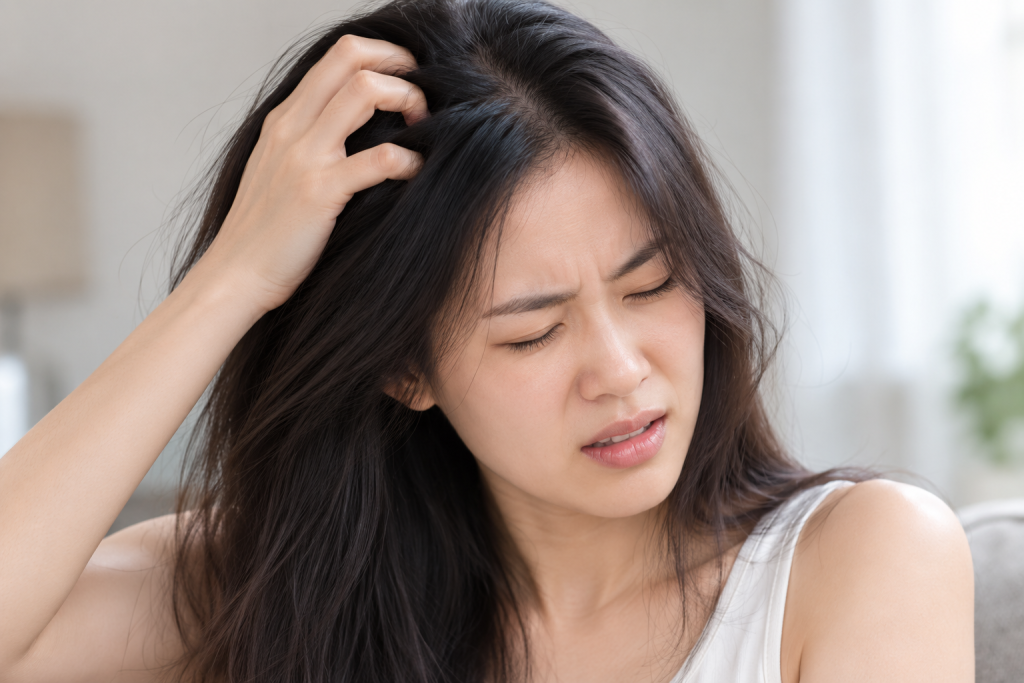
Itchy Scalp in Singapore: Causes, Symptoms & Treatment Options

An itchy scalp can be more than an occasional inconvenience. For some people, the itching keeps returning, while others may notice accompanying concerns such as flakes, redness, excessive oiliness, dryness or scalp sensitivity.
 
In Singapore, the hot and humid climate can also influence how the scalp feels. Heat and perspiration, together with sebum, styling products and environmental build-up, may leave the scalp feeling greasy, uncomfortable or irritated.
 
However, an itchy scalp does not always mean you have dandruff.
There are many possible causes, ranging from dry skin and product sensitivity to inflammatory scalp conditions. Understanding what may be triggering the itch is therefore an important first step towards managing it appropriately.
 
This article explores the common causes of an itchy scalp, symptoms to look out for, treatment options and when you should consider seeking professional advice.

What Is an Itchy Scalp?

An itchy scalp, also known medically as scalp pruritus, refers to an uncomfortable itching sensation affecting part or all of the scalp.
The itch may be mild and temporary, or it may persist and interfere with daily activities. Some people may also experience visible changes to their scalp, including:
  • Flaking
  • Redness
  • Dryness
  • Excessive oiliness
  • Scalp tenderness or sensitivity
  • Small bumps or irritated areas
  • A tight or uncomfortable scalp sensation

Frequent scratching can further irritate the skin and, in some cases, damage the scalp surface.

Because itchiness is a symptom rather than a condition itself, identifying the underlying cause is important.

Register your interest

Start your hair recovery journey with a personalised consultation today.

Terms & Conditions

  • Valid for first-time customers or customers who have not visited DrScalp for the past 6 months.
  • Date and Time selections are only tentative, on a first-come-first-serve basis. A member of our team will be in touch with you to confirm your selections or advise an alternative appointment subject to availability.
  • Only valid for Singaporeans, PR, LTVP or Work Pass Holders. Not available for tourists.
  • Valid at all 2 outlets.
  • By submitting this form, you agree to allow AWHL Group of companies to contact you for appointment purposes, promotional purposes and to collect, use, disclose and process all personal data submitted for marketing purposes even if you are registered with the DNC registry, exempting us against any liabilities under PDPA.

Understanding Your Scalp Is the First Step

An itchy scalp can have many possible causes, from dandruff and excess oil to dryness, product build-up, sensitivity and inflammatory scalp conditions.
For people living in Singapore, heat, humidity and frequent sweating may also make scalp discomfort or build-up more noticeable.
 
Rather than repeatedly scratching or assuming that every itchy scalp is caused by dandruff, understanding your scalp condition can help you choose more appropriate scalp-care habits.
 
If your scalp remains persistently itchy or you notice significant redness, sores, pain or unusual hair loss, consult a doctor or dermatologist for further assessment.
 
For non-medical scalp concerns such as oiliness, flaking and build-up, a professional scalp assessment can also provide a closer look at your scalp condition and help guide a personalised scalp-care routine.

What Causes an Itchy Scalp?

Several factors can contribute to scalp itching. Some are relatively straightforward to manage, while others may require assessment by a healthcare professional.
Dandruff is one of the most common conditions associated with an itchy, flaky scalp.
 
It typically causes visible white or greyish flakes that may fall onto the hair or shoulders. The scalp may also feel oily, irritated or itchy.
 
Dandruff can be associated with several factors, including scalp oil levels and the activity of Malassezia, a type of yeast naturally found on the skin.
 
While occasional flaking can be mild, persistent dandruff may require targeted scalp care or medicated products.
Your scalp naturally produces sebum to help protect the skin and hair.
 
However, when excessive oil combines with sweat, dead skin cells and product residue, the scalp may feel greasy or uncomfortable.
 
This can be particularly noticeable in Singapore’s warm and humid environment, where perspiration may contribute to the sensation of an oily or itchy scalp.
 
People with an oily scalp may notice:
  • Hair becoming greasy quickly
  • Scalp odour
  • Sticky or oily flakes
  • Scalp build-up
  • Itchiness after sweating


Regular cleansing with products appropriate for your scalp type can help reduce excess build-up.
Not every itchy scalp is oily.
 
A dry scalp can also cause itching, tightness and small dry flakes. This may happen when the skin’s natural moisture barrier becomes disrupted.
 
Possible contributing factors include frequent washing, harsh shampoos, hot water, air-conditioned environments or products that do not suit your scalp.
 
Dry scalp flakes are often smaller and drier than the greasy flakes commonly associated with dandruff, although it can be difficult to distinguish between the two without an assessment.
Hair products can accumulate on the scalp over time, particularly when they are not thoroughly washed away.
 
Common sources of build-up include:
  • Dry shampoo
  • Hair spray
  • Styling wax or gel
  • Leave-in products
  • Hair oils
  • Conditioner applied directly to the scalp


Sweat, sebum and dead skin cells can further contribute to this build-up.
 
For some individuals, accumulated residue may leave the scalp feeling oily, heavy, uncomfortable or itchy.
Sometimes, the problem is not how much product is being used but what is in the product.
 
Certain ingredients in shampoos, hair dyes, fragrances or styling products may irritate the scalp or trigger an allergic reaction in susceptible individuals.
 
Symptoms may include:
  • Itching
  • Burning or stinging
  • Redness
  • Dryness
  • Rash
  • Swelling


If scalp irritation begins shortly after introducing a new hair product or undergoing a chemical hair treatment, discontinue the suspected product and consider seeking medical advice if symptoms persist or are severe.
Seborrhoeic dermatitis is an inflammatory skin condition that commonly affects oily areas of the body, including the scalp.
 
It may cause:
  • Persistent dandruff
  • Greasy or scaly patches
  • White or yellowish flakes
  • Redness
  • Itching


The condition may fluctuate over time, with periods when symptoms become more noticeable.
 
Because seborrhoeic dermatitis can resemble ordinary dandruff, persistent or significant symptoms should be assessed by a doctor or dermatologist.
Psoriasis is an inflammatory condition that can affect the scalp.
 
Scalp psoriasis may cause thick, well-defined areas of scaling that can extend beyond the hairline. The affected areas may itch, feel sore or become irritated.
 
Unlike ordinary dandruff, the scales associated with psoriasis can be thicker and more persistent.
 
A healthcare professional should assess suspected scalp psoriasis so that an appropriate treatment plan can be recommended.
Folliculitis occurs when hair follicles become inflamed.
 
On the scalp, it may appear as small red bumps or pimple-like spots around the hair follicles. These areas may feel itchy, tender or painful.
 
Different factors can contribute to folliculitis, including irritation and certain infections.
 
If bumps are widespread, painful, filled with pus or keep returning, medical assessment is recommended.
Stress does not necessarily directly cause every type of scalp condition, but it can influence how some inflammatory skin conditions behave.
 
Periods of stress may coincide with worsening symptoms in conditions such as psoriasis or seborrhoeic dermatitis.
 
Lifestyle factors including sleep, hair-care habits, frequent sweating and the use of helmets or headwear may also affect how comfortable the scalp feels.

Why Does My Scalp Itch More in Singapore?

Singapore’s tropical climate means heat, humidity and perspiration are part of everyday life.
 
For people who already have an oily or sensitive scalp, sweating may make existing discomfort more noticeable.
 
Sweat can mix with sebum, dead skin and styling-product residue on the scalp. Wearing helmets, caps or other head coverings for extended periods can also create a warm, moist environment around the scalp.
 
This does not mean Singapore’s weather directly causes every itchy scalp condition. Instead, environmental factors may contribute to scalp build-up or aggravate symptoms in some individuals.
 
Maintaining appropriate scalp hygiene can therefore be particularly important in a hot and humid environment.

How Can You Manage an Itchy Scalp?

The appropriate approach depends on why your scalp is itching.
 
Treating every itchy scalp as dandruff may not address the underlying issue. A dry scalp, oily scalp and inflammatory scalp condition can require very different approaches.
 
Here are several ways that may help support scalp comfort.
Scalp Care Practice If You Do It If You Don't
Keep your scalp clean
Removes excess oil, sweat and debris that may contribute to itchiness.
Build-up may worsen itching, odour and scalp discomfort.
Use products suitable for your scalp
Helps maintain scalp balance and reduces the likelihood of irritation.
Unsuitable products may trigger dryness, oiliness or irritation.
Avoid excessive scratching
Protects the scalp barrier and reduces skin damage.
Repeated scratching may worsen inflammation and increase the risk of skin injury.
Remove styling-product build-up
Keeps the scalp cleaner and more comfortable.
Product residue may accumulate and contribute to irritation.
Identify personal triggers
Helps reduce recurring episodes by avoiding known triggers.
Persistent exposure to triggers may cause symptoms to continue or recur.

How to Prevent an Itchy Scalp

Not every episode of scalp itching can be prevented, particularly when an underlying skin condition is involved.
 
However, good scalp-care habits may help reduce avoidable irritation and build-up.
 
Consider:
  • Washing your scalp according to its oil and activity levels
  • Rinsing shampoo and conditioner thoroughly
  • Avoiding excessive styling-product accumulation
  • Washing or drying the scalp after heavy sweating when appropriate
  • Keeping helmets, caps, pillowcases and hair accessories clean
  • Avoiding aggressive scratching
  • Introducing new scalp products gradually if your skin is sensitive
  • Paying attention to recurring triggers


The goal is not to strip the scalp of all its natural oils but to maintain a clean and comfortable scalp environment.
 
If your itchy scalp persists despite appropriate scalp-care habits, or you experience recurring flaking, excessive oiliness, redness or ongoing discomfort, a professional scalp assessment may help determine the underlying cause for further evaluation and treatment recommendations.

Treatments for an Itchy Scalp

The most appropriate treatment for an itchy scalp depends on its underlying cause. While occasional itching may improve with simple changes to your scalp care routine, persistent or severe itchiness may require medical assessment to identify an underlying scalp condition such as dandruff, seborrhoeic dermatitis, eczema, psoriasis, fungal infections or allergic reactions.
 
Treatment focuses on relieving itchiness while addressing the root cause rather than simply masking symptoms. This may involve improving scalp hygiene, using targeted scalp-care products, treating inflammation or managing an underlying skin condition.
 
For many people, a combination of appropriate scalp care and medical treatment, when necessary, provides the best long-term results.
Treatment Option How It Works Best Suited For Advantages Limitations
Improving scalp care habits
Reduces sweat, excess oil, product build-up and other factors that may contribute to scalp irritation.
Mild or occasional itchiness without other significant symptoms.
Simple, non-invasive and supports overall scalp health.
May not resolve itching caused by an underlying scalp condition.
Changing scalp-care products
Eliminates products that may trigger irritation while introducing formulations better suited to the scalp type.
Individuals who developed itching after using new shampoos, conditioners or styling products.
Helps reduce irritation caused by unsuitable products or ingredients.
Improvement may take time, and identifying the trigger may require trial and observation.
Medicated shampoos
Contain active ingredients that help manage dandruff, seborrhoeic dermatitis, fungal overgrowth or scalp inflammation.
Itchy scalp associated with dandruff, flakes or oily scalp conditions.
Can treat both itchiness and the underlying cause in many cases.
The appropriate formulation depends on the underlying condition and should be used as directed.
Prescription topical medications
Reduce inflammation, control allergic reactions or treat specific scalp conditions with medicated lotions, creams or solutions.
Persistent, severe or treatment-resistant itchy scalp.
Provides targeted treatment for diagnosed scalp disorders.
Requires assessment and prescription by a healthcare professional.
Treating the underlying scalp condition
Addresses medical conditions such as eczema, psoriasis, fungal infections or seborrhoeic dermatitis.
Individuals whose itchiness is caused by an identifiable scalp disorder.
Offers the best chance of long-term symptom control by treating the root cause.
Requires accurate diagnosis before appropriate treatment can begin.

Conclusion

An itchy scalp is a common concern that can have many possible causes, including dandruff, excess oil, dryness, product build-up, sensitivity and certain scalp conditions. In Singapore, the hot and humid climate may also contribute to increased sweating and scalp build-up, making existing itchiness or irritation more noticeable.
 
Because the underlying cause can differ from person to person, managing an itchy scalp starts with understanding what may be triggering the symptoms. Maintaining appropriate scalp hygiene, using products suited to your scalp type and avoiding excessive scratching may help improve scalp comfort.
 
If your itchy scalp persists, keeps returning or occurs together with noticeable redness, sores, pain or hair loss, consider consulting a doctor or dermatologist for an appropriate assessment.
 
For concerns such as scalp oiliness, flaking or build-up, a professional scalp assessment may also help you better understand your scalp condition and determine a suitable scalp-care routine.

Frequently Asked Questions About Itchy Scalp

Dandruff is only one possible cause of scalp itching. Dryness, sensitivity to hair products, product build-up, inflammatory skin conditions and other factors may cause itching without obvious dandruff.
If the itching persists, consider having the scalp assessed.
Sweating can leave the scalp feeling moist and uncomfortable. Sweat may also mix with oil and product residue already present on the scalp, which can make existing irritation or itching more noticeable.
If you exercise regularly or sweat heavily in Singapore’s climate, maintaining an appropriate cleansing routine may help.
Yes.
Excessive sebum does not necessarily mean the scalp is healthy and hydrated. Oil, sweat, dead skin, and product residue can accumulate on the scalp and may contribute to discomfort.
There is no single washing frequency that suits everyone.
The appropriate frequency depends on your scalp type, activity level, hair characteristics, and the cause of the itching. Washing too infrequently may allow oil and residue to accumulate, while overly aggressive cleansing may worsen dryness or irritation.
No. An itchy scalp by itself does not necessarily indicate hair loss.
However, if itching occurs alongside noticeable thinning, excessive shedding, bald patches, or significant scalp inflammation, consider seeking professional medical advice.

Medical Journal References

Lina Alhanshali, Michael Buontempo, Jerry Shapiro, Kristen Lo Sicco, Medication-induced hair loss: An update, Journal of the American Academy of Dermatology, Volume 89, Issue 2, Supplement, 2023, Pages S20-S28, ISSN 0190-9622, https://doi.org/10.1016/j.jaad.2023.04.022.


Sibbald, C. (2023, May 1). Alopecia Areata: An Updated Review for 2023. Journal of Cutaneous Medicine and Surgery; SAGE Publishing. https://doi.org/10.1177/12034754231168839


Natarelli, N., Gahoonia, N., & Sivamani, R. K. (2023). Integrative and Mechanistic Approach to the Hair Growth Cycle and Hair Loss. Journal of Clinical Medicine, 12(3), 893. https://doi.org/10.3390/jcm12030893


Babadjouni, A., Pouldar Foulad, D., Hedayati, B., Evron, E., & Mesinkovska, N. (2021). The Effects of Smoking on Hair Health: A Systematic Review. Skin Appendage Disorders, 7(4), 251–264. https://doi.org/10.1159/000512865
Darwin, E., Hirt, P. A., Fertig, R., Doliner, B., Delcanto, G., & Jimenez, J. J. (2018). Alopecia Areata: Review of Epidemiology, Clinical Features, Pathogenesis, and New Treatment Options. International journal of trichology, 10(2), 51–60. https://doi.org/10.4103/ijt.ijt_99_17


Kerure, A. S., & Patwardhan, N. (2018). Complications in Hair Transplantation. Journal of cutaneous and aesthetic surgery, 11(4), 182–189. https://doi.org/10.4103/JCAS.JCAS_125_18

Famenini, S., Slaught, C., Duan, L., & Goh, C. (2015, October 1). Demographics of women with female pattern hair loss and the effectiveness of spironolactone therapy. Journal of the American Academy of Dermatology; Elsevier BV. https://doi.org/10.1016/j.jaad.2015.06.063