
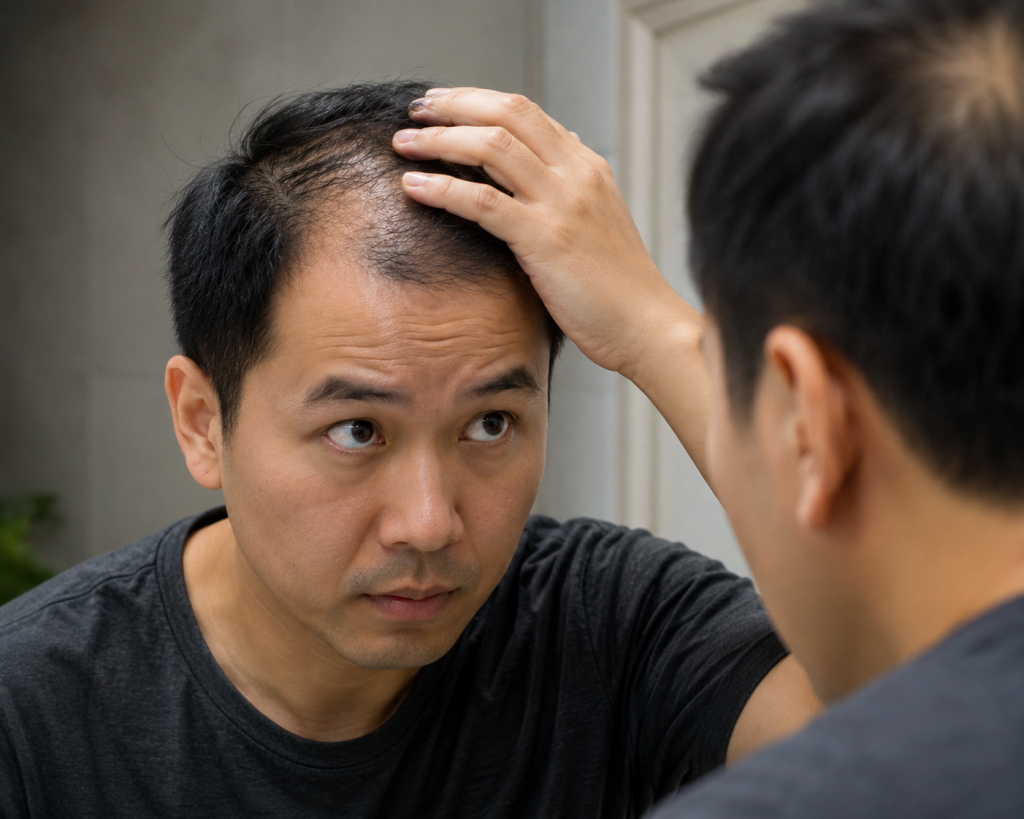
Hair naturally goes through a continuous growth cycle consisting of three main phases:
| Hair Growth Phase | Description |
|---|---|
|
Anagen Phase |
Active hair growth phase where the hair follicle produces new hair |
|
Catagen Phase |
Transitional phase where hair growth slows down |
|
Telogen Phase |
Resting phase where older hair sheds before new growth begins |
Start your hair recovery journey with a personalised consultation today.
| Factor | Normal Hair Shedding | Excessive Hair Fall |
|---|---|---|
|
Amount of Hair Lost |
Hair shedding remains relatively consistent from day to day and does not noticeably increase over time. |
Hair loss becomes significantly heavier than your usual pattern and continues for several weeks or longer. |
|
Hair on Pillow or Clothing |
A few strands may be seen occasionally after sleeping or throughout the day. |
Hair strands are frequently found on pillows, clothing or around the home in much larger amounts. |
|
Hair During Washing |
Some hair loss while shampooing is expected, especially if you wash your hair less frequently. |
Large clumps or noticeably more hair than usual are seen during washing, even with your normal routine. |
|
Hair During Brushing or Styling |
Hairbrush contains a small amount of shed hair after brushing. |
Hairbrush fills with significantly more hair, or hair falls continuously while styling. |
|
Hair Density |
Overall hair volume and thickness remain stable. |
Hair gradually appears thinner with reduced overall volume and density. |
|
Hair Parting |
Hair part width remains relatively unchanged over time. |
Hair part becomes visibly wider, making the scalp easier to see. |
|
Hairline |
Hairline maintains its usual shape and position. |
Hairline gradually recedes, particularly around the temples or forehead. |
|
Scalp Visibility |
Minimal scalp is visible except where the hair is naturally parted. |
More scalp becomes visible due to reduced hair coverage or thinning areas. |
|
Changes Over Time |
Shedding fluctuates slightly but returns to your normal baseline. |
Hair loss continues to worsen or persists for several months without improvement. |
|
Need for Medical Assessment |
Usually part of the normal hair growth cycle and not a cause for concern. |
May indicate an underlying scalp or medical condition and should be professionally evaluated if persistent. |
| What You Notice | Possible Concern |
|---|---|
|
Hair falling evenly across the scalp |
Diffuse hair shedding |
|
Receding temples or hairline |
Pattern hair loss |
|
Wider centre parting |
Female pattern hair loss |
|
Round bald patches |
Alopecia areata |
|
Increased shedding after stress |
Telogen effluvium |
|
Hair becoming finer over time |
Hair follicle miniaturisation |
Hair fall can occur due to many different factors. Some causes are temporary, while others may require early intervention.
Consider seeking professional advice if you notice:
Early assessment can help identify possible causes and guide appropriate next steps.
The most appropriate hair loss treatment depends on the underlying cause of the hair fall. Because hair loss can result from factors such as genetics, hormonal changes, nutritional deficiencies, scalp disorders, stress or certain medical conditions, identifying the cause is an important first step before selecting the most suitable treatment.
| Hair Loss Treatment | How It Works | Best Suited For | Key Benefits | Things to Consider |
|---|---|---|---|---|
|
Lifestyle Modifications |
Addresses lifestyle factors that may contribute to hair loss, such as chronic stress, inadequate sleep, smoking and excessive heat or chemical styling. |
Individuals experiencing hair shedding associated with stress, poor sleep, frequent hairstyling or lifestyle-related triggers. |
Supports overall scalp and hair health, may reduce preventable hair shedding and complements other hair loss treatments. |
Improvements may take several months to become noticeable and are most effective when maintained consistently alongside other appropriate treatments. |
|
Diet and Nutritional Optimisation |
Ensures the body receives essential nutrients required for healthy hair growth, including adequate protein, iron, zinc, vitamin D and B vitamins. |
Individuals with poor dietary intake, restrictive diets or suspected nutritional deficiencies affecting hair health. |
Supports healthy hair growth from within and may help address nutritional factors contributing to diffuse hair thinning. |
Not all hair loss is caused by nutritional deficiencies. Supplements should only be taken when appropriate and, where necessary, under professional guidance. |
|
AI Scalp Analysis |
Uses advanced imaging technology to evaluate scalp health, hair density, follicle condition, scalp oil production and other factors that may contribute to hair loss. |
Individuals experiencing persistent hair fall, hair thinning or scalp concerns who want a detailed scalp assessment. |
Provides personalised insights into scalp health and helps guide appropriate treatment recommendations based on individual findings. |
Evaluates the condition of the scalp and hair follicles but does not replace a medical diagnosis where an underlying medical condition is suspected. |
|
Deep-cleanses the scalp, removes excess sebum and product build-up, and supports a healthier scalp environment for optimal hair growth. |
Individuals with oily scalp, dandruff, scalp congestion, itchiness or scalp imbalance that may affect hair health. |
Helps improve scalp hygiene, reduce scalp build-up and maintain an environment that supports healthier hair follicles. |
Typically most effective when combined with a consistent home scalp care routine and ongoing maintenance. |
|
|
Scalp Care Products for Home Use |
Supports daily scalp maintenance through regular cleansing and targeted scalp care between professional treatments. |
Individuals seeking long-term scalp maintenance or managing oily, dry, sensitive or dandruff-prone scalps. |
Helps maintain scalp balance, supports professional treatment outcomes and promotes consistent scalp care. |
Products should be selected according to individual scalp concerns rather than hair type alone. |
|
Medical Assessment |
Investigates whether hair loss is related to hormonal changes, autoimmune conditions, nutritional deficiencies, medication side effects or other medical causes. |
Individuals with sudden, severe, patchy or unexplained hair loss, or hair loss accompanied by other symptoms. |
Identifies underlying medical conditions and enables targeted treatment based on an accurate diagnosis. |
May involve clinical examination, blood tests or referral to a dermatologist or other healthcare professional depending on the suspected cause. |
Daily shedding varies between individuals. Some hair loss is normal as part of the natural growth cycle. However, sudden increases or visible thinning may indicate an underlying concern.
Yes. Significant stress may affect the hair growth cycle and contribute to increased shedding, commonly known as telogen effluvium.
Certain scalp conditions involving irritation, inflammation or excessive build-up may affect scalp health and contribute to hair concerns.
Whether hair grows back depends on the underlying cause of the hair fall. Temporary conditions such as stress, illness or nutritional deficiencies may allow hair to regrow once the contributing factors are addressed. However, certain types of hair loss, including genetic hair loss, may require ongoing management. A professional scalp assessment can help identify the underlying cause and recommend appropriate treatment options.
No. Washing your hair does not usually cause hair fall. It is common to notice hairs shedding during washing because loose hairs that were already in the shedding phase are released together. Excessive hair fall during washing, particularly if accompanied by visible thinning or scalp changes, should be professionally assessed.
Some forms of hair fall are reversible, while others are progressive. Hair loss caused by temporary factors such as stress, illness or nutritional deficiencies may improve once the underlying issue is addressed. Conditions such as androgenetic alopecia (pattern hair loss) often require ongoing management to slow progression and support hair growth.
Yes. Stress-related hair fall, commonly known as telogen effluvium, often improves once the body recovers from the triggering event. Hair shedding may continue for several weeks or months before gradually returning to its normal growth cycle. If hair fall persists or worsens, professional assessment is recommended to rule out other contributing factors.
An oily scalp does not directly cause hair fall, but excess sebum, scalp build-up and certain scalp conditions may create an environment that affects overall scalp health. In some individuals, oily scalp may occur alongside conditions such as seborrhoeic dermatitis or folliculitis, which may contribute to increased hair shedding. Identifying the underlying cause is important for appropriate management.
Consider seeking professional assessment if you notice excessive daily shedding, visible thinning, widening of the hair part, receding hairline, bald patches, sudden hair loss, or hair fall accompanied by scalp itching, redness or pain. Early evaluation may help identify the underlying cause and determine the most appropriate management plan.