
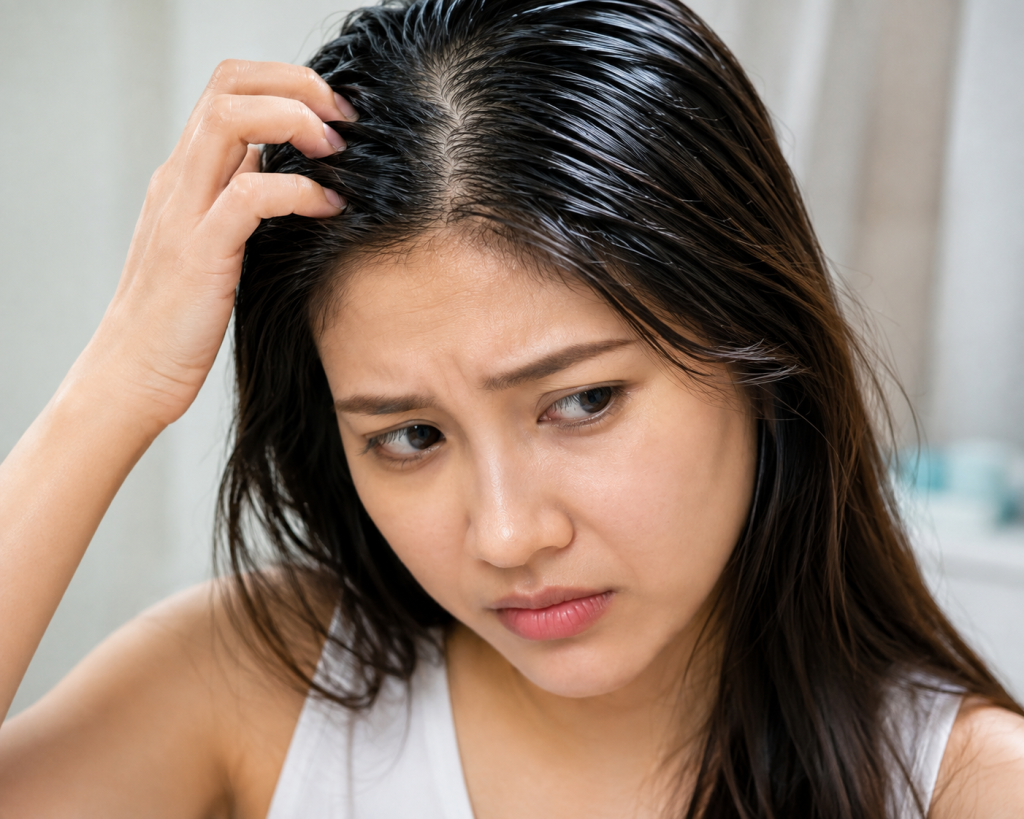
Oily Scalp in Singapore: Causes, Symptoms, Treatment & How to Manage Excess Scalp Oil

Introduction

Does your hair start looking greasy only a few hours after washing? Or does your scalp often feel oily, sticky or uncomfortable, especially after spending time outdoors in Singapore’s hot and humid weather?
 
An oily scalp is one of the most common scalp concerns among both men and women. While the scalp naturally produces an oily substance called sebum to protect the skin and hair, overactive sebaceous glands can lead to excessive oil production. Combined with sweat, dead skin cells and hair-product residue, excess sebum may leave your scalp feeling greasy, heavy and uncomfortable.
 
Although an oily scalp is not necessarily a medical condition, persistent oiliness may occur alongside concerns such as dandruff, scalp build-up, itchiness, irritation and even hair thinning. Excess oil may also disrupt the scalp microbiome—the natural balance of microorganisms that help maintain a healthy scalp environment—which may contribute to irritation or dandruff in some individuals.
 
Understanding what causes an oily scalp is the first step towards choosing the right scalp-care routine and treatment approach.

What Is an Oily Scalp?

An oily scalp occurs when the sebaceous glands produce more sebum than is needed to maintain a healthy scalp.
 
Sebum is essential for lubricating and protecting both the scalp and hair. However, when excess oil accumulates faster than it is removed, the scalp may begin to feel greasy and uncomfortable. Maintaining a healthy balance between cleansing and natural oil production is important, as overly aggressive cleansing may sometimes stimulate the scalp to compensate by producing more oil.

Common Oily Scalp Symptoms

People with an oily scalp may notice:

  • Hair becoming greasy shortly after washing
  • Flat or weighed-down hair
  • Shiny or oily-looking roots
  • Sticky scalp build-up
  • Scalp odour
  • White or yellowish flakes
  • Itchiness or irritation
  • Hair strands clumping together near the roots

The amount of oil considered “excessive” varies between individuals, as genetics, hormones and lifestyle all influence sebum production.

注册您的兴趣

立即进行个性化咨询,开始您的头发恢复之旅。

条款和条件

  • Valid for first-time customers or customers who have not visited DrScalp for the past 6 months.
  • Date and Time selections are only tentative, on a first-come-first-serve basis. A member of our team will be in touch with you to confirm your selections or advise an alternative appointment subject to availability.
  • Only valid for Singaporeans, PR, LTVP or Work Pass Holders. Not available for tourists.
  • Valid at all 2 outlets.
  • By submitting this form, you agree to allow AWHL Group of companies to contact you for appointment purposes, promotional purposes and to collect, use, disclose and process all personal data submitted for marketing purposes even if you are registered with the DNC registry, exempting us against any liabilities under PDPA.

Common Causes of an Oily Scalp

Several factors can influence how much sebum your scalp produces and how quickly oil accumulates.

Cause Why It May Contribute Common Signs Recommended Approach
Naturally Active Sebaceous Glands
Genetics, hormones and age can naturally increase sebum production.
Hair becomes greasy quickly, shiny roots.
Use scalp-care products formulated for oily scalps and cleanse according to your activity level.
Singapore’s Hot & Humid Climate
Sweat mixes with oil, dead skin cells and product residue, making oiliness more noticeable.
Sticky scalp, oily roots after commuting or outdoor activities.
Wash after heavy sweating when appropriate and avoid leaving sweat on the scalp for prolonged periods.
荷尔蒙变化
Hormones such as androgens influence sebaceous gland activity.
Increased scalp and facial oiliness.
Maintain a consistent scalp-care routine and seek medical advice if sudden changes occur with other symptoms.
Hair Product Build-Up
Styling products, oils and leave-in treatments can accumulate on the scalp.
Heavy-feeling hair, greasy roots and visible residue.
Remove products thoroughly during cleansing and avoid excessive layering.
Inadequate Scalp Cleansing
Oil, sweat and residue gradually accumulate over time.
Persistent greasiness, scalp build-up and discomfort.
Cleanse according to your scalp type without aggressively scrubbing the scalp.
Heavy Hair Products
Rich conditioners and oils may weigh down oily roots.
Flat roots and greasy-looking hair.
Apply conditioners primarily to the mid-lengths and ends.
Seborrhoeic Dermatitis
An inflammatory scalp condition that commonly affects oily areas.
Yellowish flakes, redness and persistent itching.
Seek professional assessment if symptoms are persistent or severe.
Frequent Touching of Hair
Oils from the hands transfer onto the hair and scalp.
Greasy hair around frequently touched areas.
Minimise unnecessary touching and clean brushes, combs and hair accessories regularly.

Why Does My Hair Become Oily So Quickly?

If your hair feels greasy within hours of washing, the oil is usually coming from your scalp rather than the hair itself.
Sebum naturally spreads from the scalp onto the hair shaft. People with fine or straight hair may notice oiliness sooner because oil travels more easily along the strands.
Other contributing factors include:
  • Naturally high sebum production
  • Frequent sweating
  • Product build-up
  • Heavy styling products
  • Inadequate cleansing
  • Wearing helmets or caps
  • Frequently touching your hair

Developing an effective scalp oil control routine starts with identifying whether the issue is caused by excessive sebum production, inadequate cleansing, unsuitable products or another underlying scalp condition.

Can an Oily Scalp Cause Dandruff?

An oily scalp and dandruff can occur together, but they are not the same condition.
Malassezia is a naturally occurring yeast that lives on most people’s scalps. In some individuals, increased activity may contribute to dandruff and scalp irritation.
When dandruff develops on an oily scalp, flakes often appear larger, stickier or slightly yellowish compared to the fine white flakes associated with a dry scalp.
If persistent oiliness is accompanied by significant flaking, redness or itchiness, consider reading our guide on Dandruff in Singapore or seeking a professional scalp assessment.

Can an Oily Scalp Cause Hair Loss?

Having an oily scalp does not automatically mean you will experience hair loss.
However, persistent scalp oiliness may occur alongside conditions such as scalp inflammation, dandruff or follicle congestion that can affect overall scalp health.

If you notice excess oil together with:

  • Increased hair shedding
  • Progressive hair thinning
  • Widening hair part
  • Receding hairline
  • Bald patches
  • Persistent scalp redness
it is advisable to seek a professional scalp assessment to determine the underlying cause.
You may also find our article on Hair Loss in Singapore helpful if you’re experiencing thinning hair together with scalp concerns.

Treatments for an Oily Scalp

Managing an oily scalp focuses on reducing excess oil and scalp build-up while maintaining the scalp’s natural protective balance.

Oily Scalp Treatment Best For How It Helps Control Excess Scalp Oil Things to Consider
Oil-Control Shampoo
Individuals whose scalp becomes greasy within 24–48 hours after washing.
Cleanses excess sebum, sweat and product build-up while helping maintain a balanced scalp environment.
Choose a shampoo formulated for oily scalps. Avoid excessively harsh cleansing, which may irritate some individuals.
Clarifying Shampoo
People who frequently use styling products or experience noticeable scalp build-up.
Removes stubborn residue, excess oil and impurities that regular shampoos may not completely eliminate.
Generally intended for occasional rather than daily use, depending on the product instructions and individual scalp tolerance.
Regular Scalp Cleansing
Most people with mild to moderate oily scalp.
Prevents excessive oil accumulation, keeping the scalp clean and comfortable.
Wash according to your scalp’s oil production, activity level and how much you sweat rather than following a fixed schedule.
Scalp Exfoliating Treatments
Individuals with persistent oil build-up or clogged hair follicles.
Helps remove dead skin cells, excess sebum and accumulated residue from the scalp surface.
Excessive exfoliation may irritate the scalp, so these treatments should be used according to product recommendations.
Lifestyle and Hair Care Adjustments
Anyone looking to reduce recurring scalp oiliness.
Minimises factors that contribute to oily scalp, such as product build-up, infrequent washing or prolonged sweat accumulation.
Works best alongside an appropriate scalp care routine rather than as a standalone treatment.
Medical Treatment for Underlying Scalp Conditions
Individuals with persistent oily scalp
Treats underlying conditions such as seborrhoeic dermatitis or folliculitis that may increase scalp oil production or worsen symptoms.
Requires assessment by a healthcare professional to determine the underlying cause and appropriate treatment

Choosing the Right Shampoo & Hair Care Products

Using the right shampoo is an important part of managing an oily scalp. Rather than choosing products based only on your hair type, it’s important to select products that address your scalp’s specific needs.

What to Look For Why it Matters
Oil-Control Shampoo
Helps remove excess sebum, sweat and impurities while maintaining a balanced scalp environment.
Gentle Cleansing Formula
Cleanses effectively without unnecessarily stripping the scalp.
Products Matched to Your Scalp Type
Oily, dandruff-prone and sensitive scalps may require different care approaches.
Consistent Home Care
Regular use of suitable products supports long-term scalp health.
At DrScalp, our ScalpDR Oil Control Shampoo is specially formulated to gently cleanse excess oil and impurities while helping maintain a fresh, balanced scalp.
If you’re also experiencing hair thinning alongside scalp oiliness, your scalp specialist may recommend complementary home-care products, such as the ScalpDR Growth Shampoo, as part of a personalised scalp-care routine.

Why Identifying the Root Cause Matters

Although oily scalps may appear similar, the underlying causes can differ significantly.
 
For some people, excess oil is primarily influenced by genetics or hormones. For others, product build-up, dandruff, scalp inflammation or unsuitable hair-care habits may be contributing factors.
 
Trying multiple shampoos without understanding your scalp condition may not always provide lasting improvement.
 
A professional scalp assessment can help identify visible scalp concerns and guide a more personalised approach to scalp care.

Professional Oily Scalp Treatment at DrScalp

If your scalp continues to feel excessively oily despite changing shampoos or adjusting your hair-care routine, it may be time to look beyond home care.
 
At DrScalp, every scalp consultation begins with an AI Scalp Analysis, providing a detailed assessment of your scalp and hair follicles to evaluate:
  • Scalp oil production
  • Sebum and product build-up
  • Visible dandruff and flaking
  • Scalp redness or irritation
  • Hair follicle condition
  • Overall scalp health
Based on your scalp assessment, our specialists can recommend a personalised care plan that may include professional scalp treatments, suitable ScalpDR home-care products and practical lifestyle advice to help support a healthier scalp environment.
 
Rather than relying on trial and error, understanding your scalp condition allows you to make more informed decisions about your scalp health.

How to Prevent Excessive Scalp Build-Up

Although you cannot—and should not—eliminate all sebum from your scalp, maintaining a balanced scalp-care routine can help reduce excessive oil and build-up.
Helpful habits include:
  • Cleansing according to your scalp type and activity level
  • Washing after heavy sweating when appropriate
  • Rinsing shampoo thoroughly
  • Avoiding heavy products on oily roots
  • Limiting unnecessary product layering
  • Cleaning pillowcases, brushes and helmets regularly
  • Avoiding excessive scratching
  • Choosing products suitable for both your scalp and hair
Consistency is generally more effective than attempting to completely strip the scalp of its natural oils.

结论

An oily scalp is a common concern that may be influenced by genetics, hormones, sweating, product build-up, hair-care habits and certain scalp conditions.
 
For people living in Singapore, the tropical climate can make excess oil and scalp build-up even more noticeable.
 
Managing an oily scalp is not about removing all of the scalp’s natural oils—it is about maintaining a healthy balance through appropriate cleansing, suitable scalp-care products and consistent scalp-care habits.
 
If your scalp continues to feel oily despite changing your routine, or if excess oil is accompanied by dandruff, itchiness, redness or hair thinning, understanding the underlying cause is the first step towards finding a suitable solution.
 
At DrScalp, our AI Scalp Analysis provides detailed insights into your scalp condition, allowing our specialists to recommend personalised scalp treatments and ScalpDR home-care products tailored to your individual needs.
 
Book your AI Scalp Analysis today and take the first step towards a cleaner, healthier and more balanced scalp.

Frequently Asked Questions

Several factors may contribute, including naturally active sebaceous glands, sweating, heavy hair-care products or product residue that has not been thoroughly removed.

The ideal frequency depends on your scalp type, activity level, exercise habits and oil production. There is no universal washing schedule suitable for everyone.

Yes. Your scalp and hair can have different needs. Many people have oily roots but dry or damaged mid-lengths and ends.

Singapore’s hot and humid climate increases perspiration, which mixes with sebum and makes scalp oiliness more noticeable.

An oily scalp alone does not cause hair loss. However, if oiliness occurs together with persistent inflammation, dandruff or noticeable hair thinning, professional assessment is recommended.

No. An oily scalp refers to excess sebum production, while dandruff involves increased scalp flaking. The two conditions can occur together but require different management approaches.

Yes. Your scalp and hair can have different needs. The scalp may produce excess sebum while the mid-lengths and ends of the hair remain dry or damaged due to heat styling, chemical treatments, environmental exposure or the natural length of the hair. Managing an oily scalp does not necessarily mean the rest of the hair requires the same care.

Yes. Genetics may influence the activity of your sebaceous glands and the amount of sebum your scalp naturally produces. While you cannot change your genetic predisposition, appropriate scalp-care habits and products may help manage excess oil and reduce scalp build-up.

Yes. Sebum is a natural oil that helps protect and lubricate the scalp and hair. Having some scalp oil is normal and necessary for maintaining scalp health. Problems typically arise when excess oil contributes to persistent greasiness, discomfort, dandruff, scalp build-up or irritation.

An oily scalp may sometimes develop an unpleasant odour, particularly when excess sebum mixes with sweat, dead skin cells and product build-up. In some individuals, this environment may also encourage the growth of naturally occurring microorganisms on the scalp, making the odour more noticeable. Maintaining appropriate scalp hygiene and addressing the underlying cause of persistent oiliness may help reduce scalp odour.