
Dandruff Singapore: Causes, Treatment & How to Manage Flaky Scalp

Dandruff in Singapore: Causes, Symptoms, Treatment Options & How to Manage It

Dandruff is one of the most common scalp concerns affecting people of all ages. While occasional flakes may seem harmless, persistent dandruff can become frustrating when it is accompanied by itching, scalp oiliness, redness or irritation.
In Singapore, the hot and humid climate may make dandruff symptoms more noticeable. Heat, sweating, excess scalp oil, frequent styling products and environmental build-up can contribute to an uncomfortable scalp environment.
However, dandruff is not simply caused by having a “dirty scalp”.
Dandruff is linked to changes in the scalp environment, including oil levels, skin cell turnover and the activity of naturally occurring microorganisms on the scalp.
Understanding why dandruff happens is the first step towards managing it effectively.
This article explores:
  • What dandruff is
  • Common causes of dandruff
  • Why dandruff may worsen in Singapore’s climate
  • How to differentiate dandruff from other scalp conditions
  • Treatment and scalp-care approaches
  • When you should seek professional advice

What Is Dandruff?

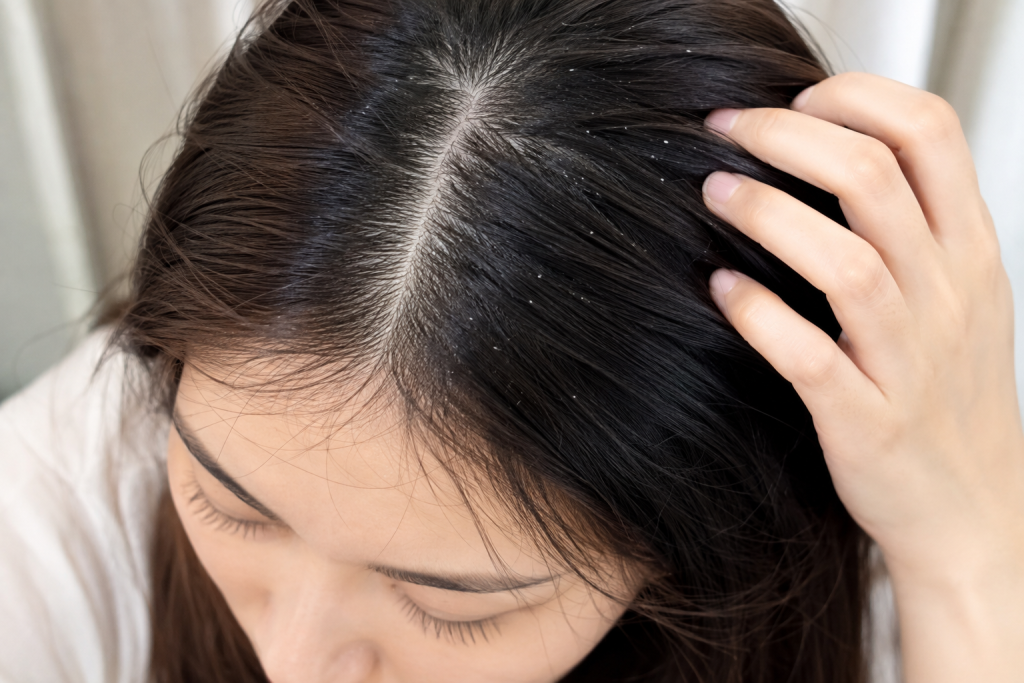
Dandruff is a common scalp condition characterised by visible flakes caused by increased shedding of scalp skin cells.
Everyone naturally sheds old skin cells from the scalp. However, when this process becomes accelerated, larger amounts of dead skin cells may accumulate and become noticeable as flakes.
Common dandruff symptoms include:
✓ White or greyish flakes on the scalp or hair
✓ Flakes appearing on clothing
✓ Scalp itchiness
✓ Oily or greasy scalp feeling
✓ Mild scalp irritation
✓ Scalp discomfort
Dandruff can range from mild and occasional to persistent and recurring.
Because dandruff is a symptom of scalp imbalance rather than simply a hygiene issue, understanding the underlying cause is important.

注册您的兴趣

立即进行个性化咨询,开始您的头发恢复之旅。

条款和条件

  • Valid for first-time customers or customers who have not visited DrScalp for the past 6 months.
  • Date and Time selections are only tentative, on a first-come-first-serve basis. A member of our team will be in touch with you to confirm your selections or advise an alternative appointment subject to availability.
  • Only valid for Singaporeans, PR, LTVP or Work Pass Holders. Not available for tourists.
  • Valid at all 2 outlets.
  • By submitting this form, you agree to allow AWHL Group of companies to contact you for appointment purposes, promotional purposes and to collect, use, disclose and process all personal data submitted for marketing purposes even if you are registered with the DNC registry, exempting us against any liabilities under PDPA.

Is Dandruff the Same as a Dry Scalp?

Many people use the terms “dry scalp” and “dandruff” interchangeably, but they are not always the same.
头皮干燥 头皮屑
Often caused by reduced moisture or irritation
Often associated with scalp oil imbalance
Flakes are usually smaller and drier
Flakes may appear larger or more noticeable
Scalp may feel tight
Scalp may feel oily or irritated
May occur with dryness elsewhere on skin
Commonly affects oilier scalp areas
However, the symptoms can overlap, making it difficult to identify the exact cause without closer assessment.

Quick Dandruff Self-Assessment

What Type of Flaking Do You Experience?

What You Notice Possible Concern
Small dry white flakes
Dry scalp or mild irritation
Larger oily flakes
Dandruff associated with excess oil
Yellowish greasy flakes
Seborrhoeic dermatitis
Thick scaling beyond hairline
Possible scalp psoriasis
Flakes with redness and irritation
Inflammatory scalp condition

Persistent symptoms may require a more detailed scalp assessment.

头皮屑的成因是什么?

Dandruff can develop due to several factors affecting the scalp environment.

One of the factors associated with dandruff is the activity of Malassezia, a type of yeast naturally found on the scalp.
 
For some individuals, changes in scalp oil levels may allow Malassezia activity to increase, which can contribute to scalp irritation and increased skin cell shedding.
 
This may result in:
  • Increased flaking
  • Itchiness
  • Scalp sensitivity
  • Oiliness


Having Malassezia on the scalp is normal. The concern occurs when the scalp environment becomes imbalanced.
The scalp naturally produces sebum, an oil that helps protect the scalp and hair.
 
However, excessive oil production may contribute to dandruff when combined with:
  • Dead skin cells
  • Sweat
  • Product residue
  • Environmental build-up


People with an oily scalp may notice:
✓ Greasy flakes
✓ Hair becoming oily quickly
✓ Scalp odour
✓ Increased itching after sweating
✓ Heavy or uncomfortable scalp feeling
 
Singapore’s warm climate may make these symptoms more noticeable due to increased perspiration.
Although dandruff is often associated with oily scalps, dryness and irritation may also contribute to flaking.
 
Possible triggers include:
  • Washing hair too frequently
  • Using harsh cleansing products
  • Hot water exposure
  • Products that do not suit your scalp
  • Excessive styling treatments


A disrupted scalp barrier may lead to discomfort, tightness and visible flakes.
Seborrhoeic dermatitis is an inflammatory scalp condition that commonly causes dandruff-like symptoms.
Compared with mild dandruff, seborrhoeic dermatitis may involve more noticeable inflammation.
 
Symptoms may include:
  • Persistent flakes
  • Yellowish or greasy scales
  • Redness
  • Itching
  • Sensitive scalp areas


Because it can resemble ordinary dandruff, persistent or severe symptoms should be assessed by a healthcare professional.
Hair products can accumulate on the scalp, especially when they are not thoroughly removed.
 
Common contributors include:
  • Dry shampoo
  • Hair oils
  • Styling wax
  • Hair sprays
  • Leave-in products
  • Heavy conditioners applied near the scalp


Build-up may trap oil, sweat and dead skin cells, causing the scalp to feel uncomfortable or appear flaky.
Stress does not directly cause every case of dandruff, but it may influence scalp conditions in some individuals.
 
Periods of increased stress may affect:
  • Scalp oil production
  • Skin barrier function
  • Existing inflammatory scalp conditions


Lifestyle factors that may affect scalp comfort include:
  • Poor sleep
  • High stress levels
  • Irregular hair washing habits
  • Frequent sweating
  • Wearing helmets or head coverings

Why Does Dandruff Get Worse in Singapore?

Singapore’s tropical climate creates several environmental factors that may influence scalp comfort.

Heat and Humidity

High humidity may increase sweating and scalp moisture.
 
Sweat can mix with:
  • Sebum
  • Dead skin cells
  • Product residue
This may contribute to a scalp environment where dandruff symptoms become more noticeable.

Frequent Sweating

People who exercise regularly or spend time outdoors may experience increased scalp oil and moisture.
 
Without suitable scalp cleansing, build-up may accumulate over time.

Helmet and Headwear Use

Motorcyclists, cyclists and individuals who wear helmets regularly may notice:
  • Increased sweating
  • Scalp discomfort
  • Oil accumulation


This does not mean helmets directly cause dandruff, but the warm environment may make existing scalp concerns more noticeable.

How Can You Manage Dandruff?

The right approach depends on why dandruff is occurring.
 
Treating every flaky scalp in the same way may not provide the best results because dandruff-like symptoms can have different causes.
Regular cleansing helps remove:
  • Excess oil
  • Sweat
  • Dead skin cells
  • Product residue


However, over-cleansing may irritate the scalp.
 
The ideal washing frequency depends on:
  • Scalp oil level
  • Lifestyle
  • Exercise habits
  • Hair type
  • Existing scalp sensitivity
Choosing products based only on hair type may not address scalp concerns.
 
For example:
Someone may have:
  • Oily scalp
  • Dry hair ends


Using heavy products directly on the scalp may increase residue.
Understanding your scalp condition helps determine a more suitable routine.
Scratching may temporarily relieve itching but can further irritate the scalp.
 
Repeated scratching may:
  • Damage the scalp surface
  • Increase sensitivity
  • Worsen discomfort


Instead, focus on identifying and managing the underlying cause.
If you frequently use:
  • Styling products
  • Hair oils
  • Dry shampoo


ensure they are properly removed.
People who sweat frequently may also need to adjust their scalp-care routine.
Depending on the cause, dandruff management may involve:
  • Anti-dandruff ingredients
  • Oil-control scalp care
  • Scalp-balancing routines
  • Professional scalp assessment


The most suitable approach depends on your individual scalp condition.

Common Mistakes That May Make Dandruff Worse

Aggressive washing may remove oil temporarily but may also irritate some scalps.
The goal is scalp balance, not completely removing natural oils.
Conditioners are usually designed for hair lengths rather than the scalp.
Applying heavy products near the scalp may contribute to residue.
Occasional flakes may be manageable at home.
However, recurring dandruff with redness, pain or irritation may indicate a deeper scalp concern.
Flaking may also occur due to:
  • Dry scalp
  • 牛皮癣
  • Seborrhoeic dermatitis
  • Product irritation
Identifying the cause is important.

Treatments for Dandruff

The most appropriate treatment for dandruff depends on its underlying cause and severity. For many people, mild dandruff can be managed with appropriate scalp care and regular use of medicated or anti-dandruff shampoos. However, persistent, severe or recurrent dandruff may require assessment by a healthcare professional to determine whether an underlying scalp condition is contributing to the symptoms.
 
Treatment aims to reduce visible flakes, relieve itchiness, control excess oil when present and restore a healthier scalp environment. In some cases, treatment may also involve addressing contributing factors such as seborrhoeic dermatitis, psoriasis, eczema or fungal overgrowth.
 
It is important to note that dandruff often requires ongoing management rather than a one-time cure. Even after symptoms improve, maintaining a suitable scalp care routine can help reduce the likelihood of recurrence.
Treatment Option How It Works Best Suited For Advantages
Regular scalp cleansing
Removes excess oil, sweat, dead skin cells and product build-up that can contribute to dandruff.
Mild dandruff and individuals with occasional flakes.
Simple first-line approach that supports overall scalp hygiene.
Anti-dandruff shampoos
Contain active ingredients that help reduce flakes, control fungal overgrowth, slow skin-cell turnover or decrease scalp inflammation.
Mild to moderate dandruff or recurrent flaking.
Widely available, convenient and effective for many cases when used consistently.
Medicated topical treatments
Prescription lotions, creams or scalp solutions help reduce inflammation and manage underlying scalp disorders.
Persistent, severe or treatment-resistant dandruff, or dandruff associated with inflammatory skin conditions.
Can provide targeted treatment for more complex scalp conditions.
Managing underlying scalp conditions
Treats conditions such as seborrhoeic dermatitis, psoriasis or eczema that may cause persistent flaking.
Individuals whose dandruff is secondary to another scalp disorder.
Addresses the root cause rather than only the visible flakes.
Lifestyle and scalp care modifications
Reduces factors that may aggravate dandruff, such as inadequate scalp cleansing, excessive product build-up or scalp irritation.
Suitable for individuals alongside other treatments.
Supports long-term scalp health and may reduce recurrence.

Choosing the Right Dandruff Shampoo & Hair Care Products

Not all dandruff shampoos are suitable for every scalp. While many products are formulated to help reduce flakes, choosing one based solely on your hair type may not address the underlying cause of your dandruff.
 
When selecting a dandruff shampoo or scalp care product, consider factors such as:
Feature to Look For Why It Matters What to Avoid
Suitable for your scalp condition
Different scalp types, such as oily, dry or sensitive, have different care needs. Choosing an appropriate shampoo helps support scalp comfort.
Using products designed for a different scalp type, which may worsen dryness or oiliness.
Gentle cleansing
Effectively removes sweat, excess oil and product build-up without unnecessarily irritating the scalp.
Harsh cleansers that leave the scalp feeling excessively dry, tight or irritated.
Supports scalp balance
Helps maintain a healthier scalp environment, which may reduce discomfort over time.
Products that consistently leave your scalp feeling irritated or unbalanced after use.
Targets your specific concern
Different formulations may focus on dandruff, oil control, sensitive scalps or dryness. Selecting one that matches your concern improves suitability.
Choosing products based solely on hair type or fragrance rather than scalp needs.
Suitable for regular use
Consistent use as part of a balanced scalp care routine may help maintain long-term scalp health.
Frequently switching between multiple products without allowing enough time to assess their effectiveness.
If your dandruff persists despite trying different shampoos, it may indicate that the underlying cause has not been correctly identified. A professional scalp assessment can help determine the most appropriate treatment approach.

结论

Dandruff is a common scalp concern in Singapore that may be influenced by factors such as scalp oil levels, microbial balance, product build-up, lifestyle habits and environmental conditions.
 
While occasional flakes may not be a major concern, persistent dandruff accompanied by itching, redness, irritation or hair changes may require closer attention.
 
Understanding the cause of your dandruff is the first step towards managing it effectively. A balanced scalp-care routine, suitable products and professional assessment when needed can help support better scalp health.
 
If your dandruff keeps returning or affects your scalp comfort, consider seeking professional advice to better understand your scalp condition.

Frequently Asked Questions About Dandruff in Singapore

Sudden dandruff may occur due to changes in scalp oil levels, stress, new hair products, lifestyle changes or environmental factors.

Singapore’s hot and humid climate does not directly cause dandruff, but heat, sweating and oil build-up may make symptoms more noticeable.

Dandruff itself does not usually cause permanent hair loss. However, severe scalp irritation, inflammation or frequent scratching may affect scalp comfort and contribute to hair concerns.

The ideal frequency depends on your scalp type, oil production, lifestyle and severity of dandruff.

No.
Dandruff and scalp psoriasis can have similar symptoms, but psoriasis usually involves thicker, more persistent scaling and requires proper assessment.
Yes.
Excess oil combined with dead skin cells and scalp microorganisms may contribute to dandruff symptoms.